Understanding How to Overcome Fear and Anxiety
Learning How to Overcome Fear and Anxiety is one of the most important steps toward living a peaceful and confident life. Fear and anxiety are natural emotions, but when they become overwhelming, they can affect your thoughts, decisions, and overall well-being.
Fear is usually a response to a real or perceived threat, while anxiety is often the anticipation of something that might happen. Both can make you feel stuck, worried, and unable to move forward.
The good news is that fear and anxiety can be managed—and even reduced significantly—when you understand how they work and take practical steps to address them.
When you begin applying the right strategies, you can:
- Calm your mind quickly
- Reduce stress and worry
- Build confidence
- Improve decision-making
- Live with more peace and control
Overcoming fear and anxiety is not about eliminating them completely. It is about learning how to respond to them in a healthy and productive way.
What Are Fear and Anxiety?
Fear is a natural reaction to danger. It helps protect you by preparing your body to respond.
Anxiety, on the other hand, is more about anticipation. It often involves worrying about future events that may never happen.
While both are normal, they can become a problem when they:
- Occur too frequently
- Feel overwhelming
- Interfere with daily life
Why Fear and Anxiety Feel So Overwhelming
Fear and anxiety affect both your mind and body. When triggered, your brain sends signals that activate stress responses like:
- Increased heart rate
- Rapid breathing
- Tension
- Racing thoughts
This can make even small situations feel intense and difficult to handle.
The Root Causes of Fear and Anxiety
Negative Thinking Patterns
Thoughts like “What if something goes wrong?” can increase anxiety and create fear.
Uncertainty and Lack of Control
Not knowing what will happen can make you feel powerless.
Past Experiences and Conditioning
Previous negative experiences can shape how you respond to situations.
How Fear and Anxiety Affect Your Mind and Body
- Mental Effects
- Overthinking
- Difficulty concentrating
- Negative thinking
- Self-doubt
- Physical Symptoms
- Sweating
- Fast heartbeat
- Fatigue
- Trouble sleeping
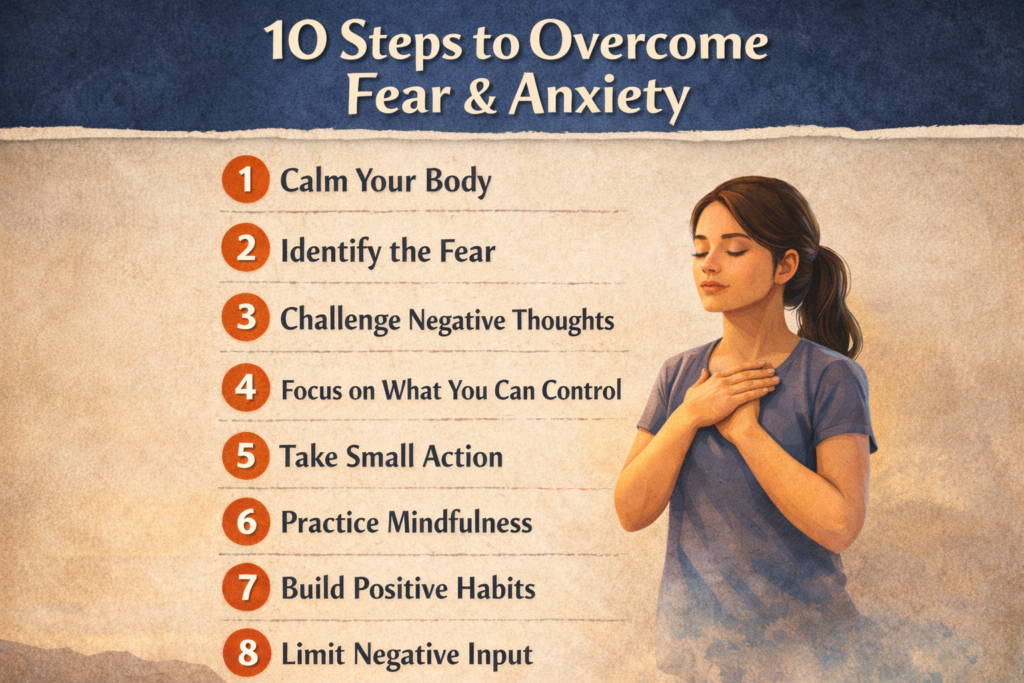
10 Powerful Steps on How to Overcome Fear and Anxiety
Step 1: Calm Your Body First
Before addressing your thoughts, calm your body.
Try this:
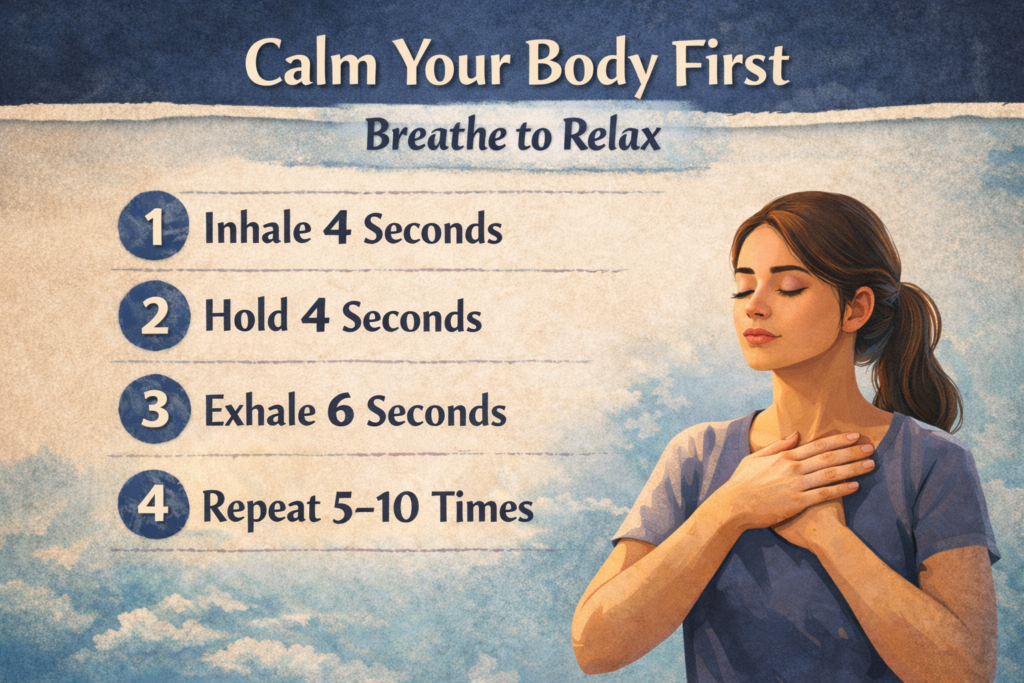
- Inhale for 4 seconds
- Hold for 4 seconds
- Exhale for 6 seconds
- Repeat several times.
Step 2: Identify the Exact Fear
- Clarity reduces intensity.
- Ask yourself:
- What exactly am I afraid of?
- Is it real or imagined?
Step 3: Challenge Negative Thoughts
Replace negative thoughts with realistic ones.
Example:
“I can’t handle this” → “I can manage this step by step”
Step 4: Focus on What You Can Control
Let go of what you cannot control and focus on actions you can take.
Step 5: Take Small Action
- Action reduces fear.
- Start with one small step:
- Send the message
- Begin the task
- Speak up
Step 6: Practice Daily Mindfulness
Mindfulness helps you stay present instead of worrying about the future.
Step 7: Build Positive Thinking Habits
Train your mind to focus on solutions instead of problems.
Step 8: Limit Negative Input
Reduce exposure to negative content that increases fear.
Step 9: Develop a Strong Routine
A daily routine provides stability and reduces uncertainty.
Step 10: Stay Consistent and Patient
Change takes time. Consistency is key.
Daily Habits to Reduce Fear and Anxiety
- Morning Routine for Calmness
- Deep breathing
- Positive affirmations
- Plan your day
- Midday Reset Practices
- Take short breaks
- Stretch or walk
- Refocus your thoughts
- Night Routine for Peaceful Sleep
- Avoid screens
- Reflect on your day
- Practice gratitude
Common Mistakes That Worsen Anxiety
- Avoiding Problems
- Avoidance can increase fear over time.
- Overthinking Everything
- Overanalyzing situations can create unnecessary stress.
- Seeking Perfection
Trying to be perfect increases pressure and anxiety.
Practical Tips to Apply Immediately
- Take slow deep breaths
- Focus on one task at a time
- Replace negative thoughts
- Stay active
- Talk to someone you trust
Frequently Asked Questions
- Can fear and anxiety be completely removed?
No, but they can be managed effectively.
- How quickly can I reduce anxiety?
Some techniques like breathing can work within minutes.
- What is the best way to handle fear instantly?
Calm your body, then challenge your thoughts.
- Can daily habits really help?
Yes, consistent habits make a big difference over time.
- Why do I feel anxious without a reason?
It may be due to subconscious thoughts or stress.
- Should I avoid situations that make me anxious?
No, gradual exposure helps reduce fear.
Conclusion
Understanding How to Overcome Fear and Anxiety gives you the power to take control of your thoughts and emotions. While fear and anxiety are natural, they do not have to control your life.
By applying these practical steps, building healthy habits, and staying consistent, you can develop confidence, reduce stress, and live with greater peace.
Remember, progress happens one step at a time—and every small step counts.