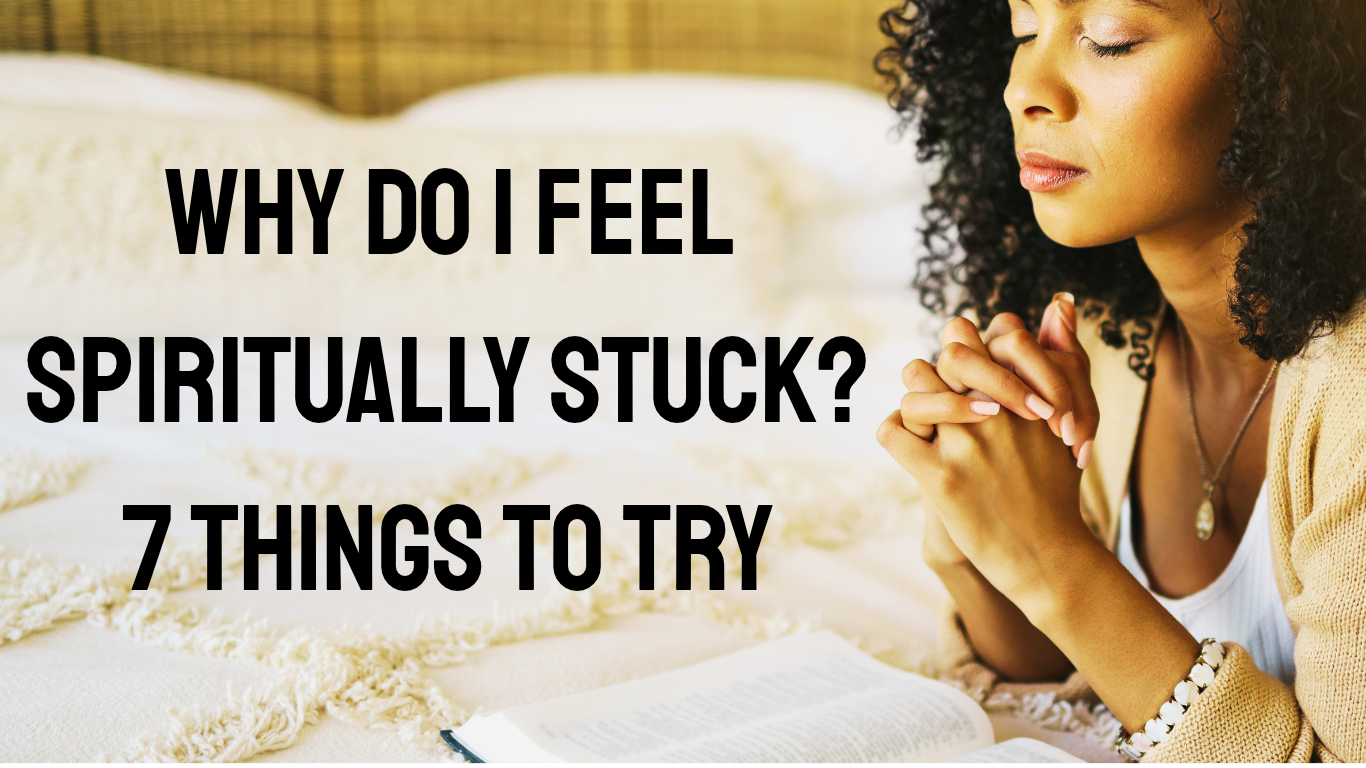
You still go to church. You still open your Bible, at least some days. But something has gone quiet. Prayer feels like talking to the ceiling, worship feels flat, and you can’t remember the last time you felt close to God. You wonder, What’s wrong with me? Did I do something wrong?
If that’s where you are, you’re not alone, and you’re not a failure. Nearly every believer experiences seasons of dryness, distance, or stagnation. Some of the people Scripture honors most went through them too.
In this article, we’ll look at what spiritual stuckness feels like, some common reasons for it, what the Bible shows about dry seasons, and seven gentle things you can try to move forward.
What Feeling Spiritually Stuck Looks Like.
Spiritual stuckness shows up differently for different people. You may recognize some of these:
- Going through the motions. Prayer, church, and Bible reading feel like duties rather than connection.
- Feeling distant from God. You wonder if He is silent, or if you’ve drifted.
- Losing excitement. Things that once stirred your faith now leave you flat.
- Repeating the same struggles. You feel stuck in the same patterns without growth.
- Avoiding God or church. Because you feel guilty, tired, or disappointed.
- Questioning things. Doubts creep in about God, prayer, or whether any of it matters.
- Feeling numb. Not sad exactly, just empty, tired, or disconnected.
These experiences are painful, but they aren’t the end of your story. Often they are signals worth listening to.
Common Reasons People Feel Spiritually Stuck.
There’s rarely one single cause. Here are some of the most common.
- Exhaustion and burnout. When you’re running on empty, spiritual energy is often the first thing to dip.
- Disappointment with God. An unanswered prayer, a loss, or a delayed dream can quietly build distance.
- Unprocessed grief or pain. Hard seasons that haven’t been grieved can leave you numb.
- Routine without relationship. Spiritual habits can become checklists, and a checklist rarely satisfies.
- Unresolved guilt or shame. An area you’re avoiding bringing to God can create distance, even though He hasn’t moved.
- Comparison. Measuring your faith against someone else’s can make your own feel small.
- Isolation. Faith grows in community, and going it alone can leave you dry.
- Health factors. Poor sleep, illness, hormonal changes, anxiety, or depression can all dull your sense of spiritual connection.
Sometimes there is no clear reason at all. That’s okay. A season of quiet doesn’t mean God has left, and it doesn’t mean you’ve failed.
Dry Seasons in Scripture.
The Bible is surprisingly honest about spiritual dryness.
- Psalm 42:1-5. The writer’s soul thirsts for God, and tears have been his food. He asks himself why he is downcast, then tells his soul to hope in God.
- Psalm 13. David cries out, “How long, Lord?” and still ends by choosing to trust God’s unfailing love.
- Psalm 63:1. David seeks God in a dry and weary land where there is no water.
- Psalm 77:7-12. The psalmist wonders whether God has rejected him, and then chooses to remember what God has done.
7 Gentle Things to Try.
- Be honest with God. Skip the polished prayer. Tell Him you feel distant, bored, angry, or numb. Psalm 62:8 invites us to pour out our hearts to Him. Honesty is a form of faith.
- Rest and care for your body first. Like Elijah, you may need sleep, food, and a break before anything else. Look at your schedule, your sleep, and your stress, and make one change.
- Shrink the routine. If your habits feel heavy, scale down. Read a single Psalm. Pray for two minutes. A small practice kept gently is better than a big one you dread.
- Change the format. Take a prayer walk, listen to Scripture on audio, sing, journal, or sit outside. Sometimes God feels nearer when the routine changes. (Our Christian journaling prompts can help.)
- Reconnect with people. Hebrews 10:24-25 encourages believers to meet together and spur one another on. Tell a trusted friend, small group leader, or pastor how you’re really doing.
- Remember and give thanks. Like the psalmist in Psalm 77:11, recall what God has done in the past. Write down three ways He has been faithful, and thank Him for them, even if you don’t feel it yet.
- Ask what’s underneath. Invite God to show you what may be going on. Psalm 139:23-24 is a good prayer for this. Is it grief, burnout, disappointment, or an area you’ve been avoiding? Consider talking it through with a pastor, coach, or counselor.
You don’t have to do all seven. Pick one this week, and be patient with the process.
When It’s More Than a Dry Season.
Sometimes what feels like spiritual numbness is connected to depression, anxiety, or trauma. Spiritual practices can help, but they are not a substitute for professional care.
Please speak with a doctor or licensed therapist if:
- The numbness, sadness, or emptiness lasts for weeks and affects daily life
- You’ve lost interest in nearly everything, not just spiritual things
- Your sleep or appetite has changed significantly
- You feel hopeless, or have thoughts of harming yourself
If you are ever in crisis, please contact your local emergency number or a crisis line right away. Needing help doesn’t mean your faith has failed. Many believers find that counseling, medical care, and spiritual support work together.
Why do I feel spiritually stuck?
Common causes include exhaustion, disappointment, unprocessed grief, routine without relationship, isolation, and health factors. Sometimes there is no clear reason, and a quiet season is part of many believers’ journeys.
Is feeling distant from God a sin?
No. Feeling distant is an experience, not a sin. Many psalmists describe it honestly. What matters is bringing your honest feelings to God and not walking away from Him.
How long do dry spiritual seasons last?
There’s no set timeline. Some last weeks, others months or longer. Rest, honesty, community, and small habits often help the season shift.
What should I do when God feels silent?
Be honest in prayer, rest, scale down your routine, change the format of your time with God, and share how you’re feeling with someone you trust. Remember that God’s presence doesn’t depend on your feelings.
Can depression make me feel spiritually numb?
Yes. Depression and anxiety can dull your sense of spiritual connection. If your numbness is persistent or comes with hopelessness, please see a doctor or licensed therapist.
Can a Christian coach help when I feel stuck?
A coach can help you identify what’s behind the stuckness, build gentle habits, and take next steps, while pointing you to professional care when needed.
Quiet Seasons Don’t Mean God Has Left.
Feeling stuck doesn’t mean you’ve failed or that He has moved away. Often it’s an invitation to rest, to be honest, and to find a gentler, more real way of walking with Him. Start small, be kind to yourself, and let the season do its work.
If you’d like a companion for this stretch of the road, I’d love to walk with you. As a Christian mindset coach, I help believers understand what’s beneath the stuckness, rebuild gentle habits, and move forward in faith.